

If we built the company today, how would we do it?
Getting more out of AI takes leaders willing to rethink how the business works. Robin Kling and Erica Gavefalk on where to start.
By Mpya Digital4 min read
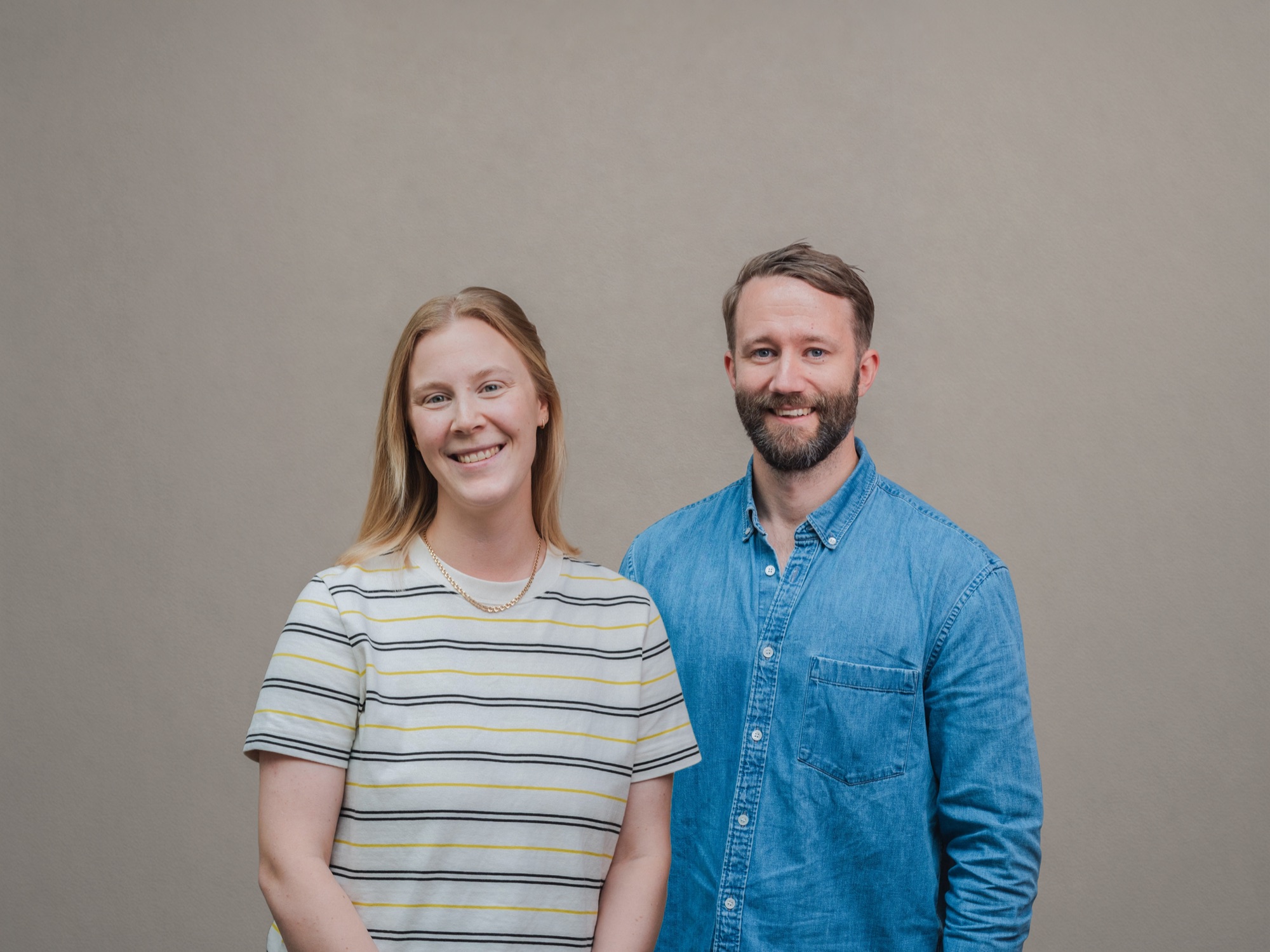
Pictured: Erica Gavefalk and Robin Kling.
Organisations that want more out of AI need leaders who are willing to rethink how the business works, and sometimes rebuild it from the ground up. AI brings new technology and tools, of course. But above all, bringing it in is about change: people, processes and the business itself.
"If we built our organisation today, with everything AI makes possible, how would we do it? That question widens the perspective. Suddenly you're looking past making today's work more efficient, at how you could build the business in a completely different way," says Robin Kling, founder of Mpya Digital.
Questioning established structures and proven ways of working is hard. But the conditions are changing, not least in the wake of the AI boom.
"Taking the time to ask whether the legacy you carry is still right for the organisation, and what needs to change, is time well spent. But questioning old systems takes courage. If you don't dare to think big, you easily end up with lots of small experiments layered on top of old systems, and no real overall approach," says Robin.
AI is moving so fast that many companies hesitate to invest big or bring in new tools, for fear of what might follow. Yet doing nothing can have even bigger consequences in the long run.
"Established companies have a lot to consider. But that can't become a reason to stand still. Startups are a good source of inspiration here: they're used to testing, rethinking and challenging what others take for granted," says Erica Gavefalk, AI Adoption Lead at Mpya Digital.
"Not every company needs to be at the cutting edge of every new technology. What matters is understanding where AI can create value in your own business, and knowing that a new technical layer on top of the old one won't be enough."
AI can't become just another IT project
Without thinking through what needs to change, AI easily turns into a string of separate projects that end up on the IT department's desk. For AI to make a real difference, the change has to reach the whole organisation, from technology and the core business to finance, sales, HR and leadership. The whole organisation has to own the transformation.
What sets AI apart from earlier technology shifts is the order things happen in. The technology is already here, but having access to it doesn't mean it's in place or built into how your business runs. The technical rollout takes work, and at the same time people, ways of working and the organisation need to develop for the technology to create real value.
Start with what actually needs doing
At its core, this is about enablement: making it possible for the organisation to actually use the technology and get results from it. It's also about transformation: helping organisations rethink how they'll work from here on.
"Making today's business more efficient is one goal. The bigger hope is that new ways of working can lift the business and open up new opportunities. But to get there, you have to start with something concrete," says Robin.
Could AI take over some of the admin and free up time for the core business, for customers and for the work that brings in revenue? That's often a good first step: find the manual, repetitive workflows and see what can be automated or simplified.
"This is where the question comes back: if we started our company today, how would we build it? What processes would we have? What tools would we use? What would the organisation look like? What would people spend their days doing? And above all: why do we do things the way we do today?"
For Robin, the point is to lift your gaze above the day-to-day optimising.
"Our role is to understand our clients' processes and, together with them, find where AI, automation and other technologies can create the most value."
Leaders have to dare to be vulnerable too
For AI to become a natural part of the business, senior leaders need to be role models and go first. That means showing how they use AI themselves, and daring to show that they don't have all the answers.
"AI can create worry at many levels of an organisation. That's why leadership needs to create a sense of safety, and show that AI is also about helping people grow and work in new ways," says Erica.
One effective way to build engagement is to let employees share what they've done with AI. Real examples work best: how a colleague sped up their work, saved time or raised the quality.
Changing how you work is the hard part
Getting started with AI is the easy bit. Changing how you work is harder. With a structure for following developments, testing what's possible and building skills step by step, the organisation can focus on what creates the most value. For employees, work can become both easier and more fun.
In the end, AI transformation comes down to more than tools. It means daring to ask why you do things the way you do, and whether you would build the business the same way today.